DRY NEEDLING
A targeted tool to reduce tension, improve mobility, and support your rehab + performance training.
A simple, effective way to help your body move & feel better.
Dry needling can be a helpful option when muscle tension, overuse, or movement restrictions are limiting your progress. It’s not a standalone fix or a replacement for physical therapy — it’s a tool we use strategically to help you move with more ease, restore mobility, and get back to the activities you care about most.
Whether you’re dealing with lingering pain, training discomfort, or a stubborn muscle pattern that’s holding you back, dry needling may be one of the techniques we use to support your recovery.
Dry needling is very effective for releasing stiff muscles, modulating pain, increasing blood flow, and activating the body’s natural healing process. We use it frequently for headaches, neck pain, sciatica/low back pain, tennis elbow, and golfer’s elbow. It is like hitting the reset button on symptomatic areas. After needling we always load our clients to ensure they’re able to maintain the positive changes we create.
WHEN TO USE
Whether you’re dealing with lingering pain, training discomfort, or a stubborn muscle pattern that’s holding you back, dry needling may be one of the techniques we use to support your recovery.
We use dry needling frequently for headaches, neck pain, sciatica and low back pain, tennis elbow, and golfer’s elbow.
SUPPORTS RECOVERY
Dry needling supports recovery by reducing muscle tension, improving blood flow, and helping restore normal movement patterns after injury or overuse.
HOW IT WORKS
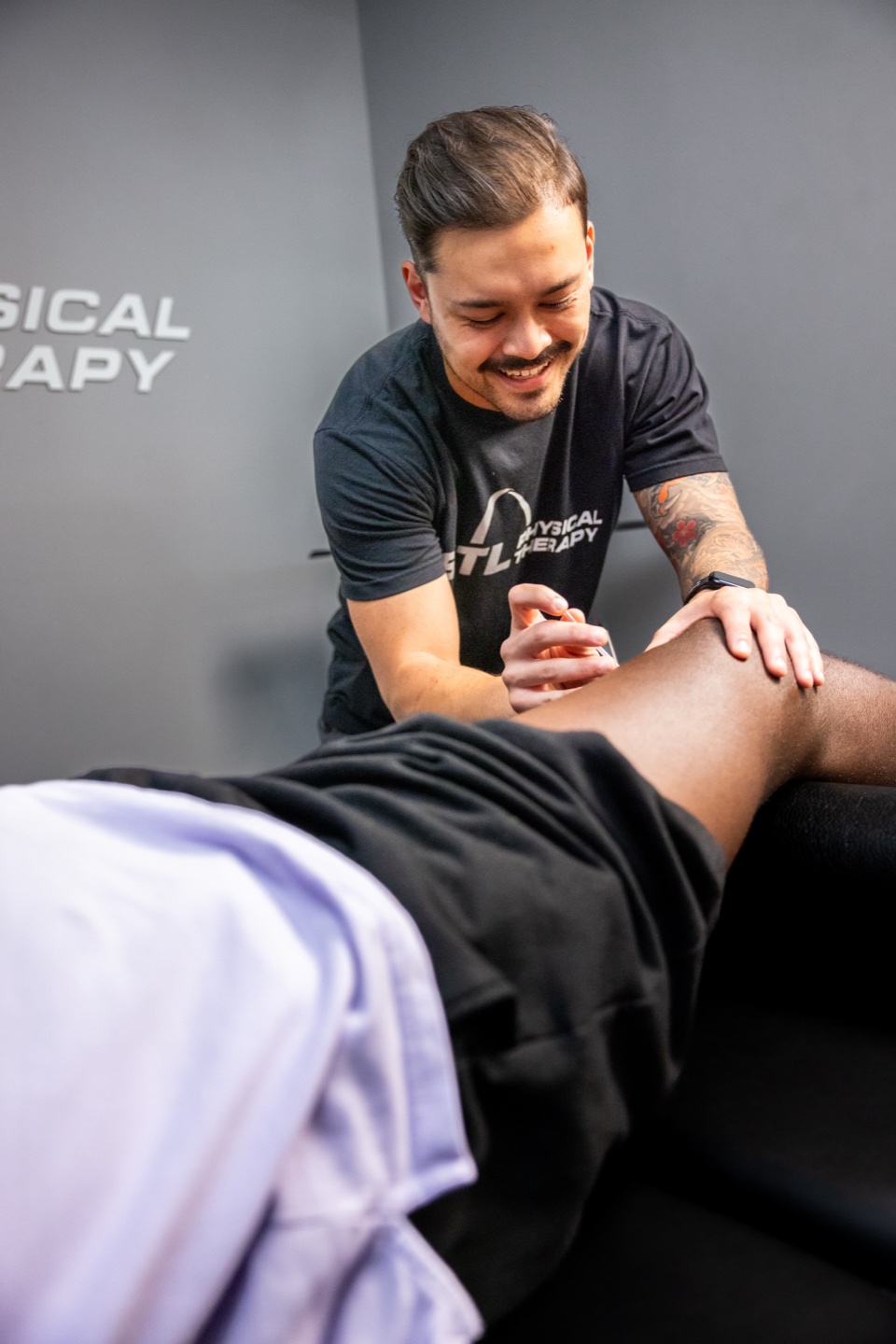
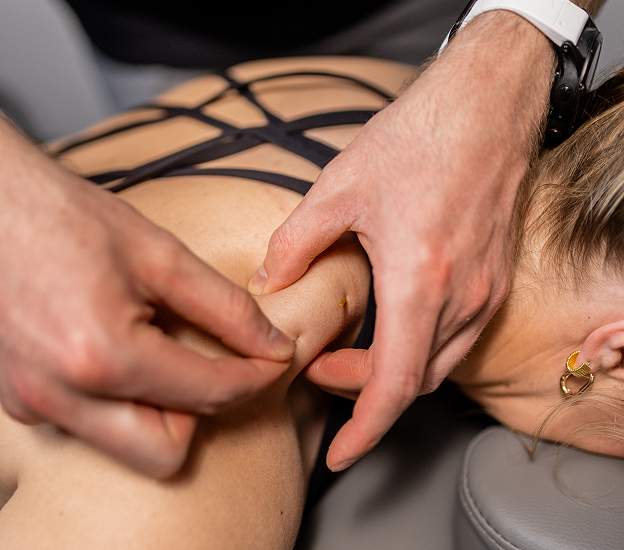
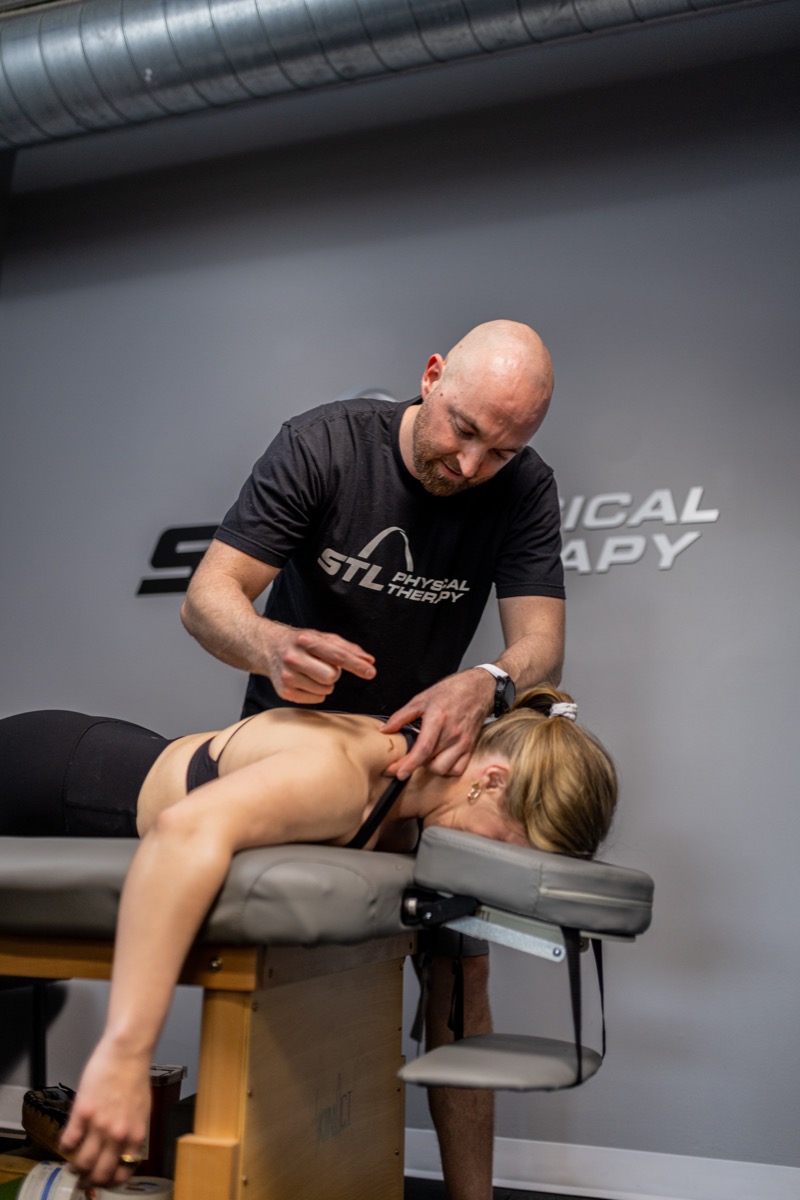
Thin, sterile needles are inserted into trigger points or tight muscle bands. This creates a local twitch response that releases tension, reduces pain signaling, and promotes natural healing.
Dry needling for athletes
Athletes place high demands on their bodies. Dry needling can help address movement restrictions that show up from:
- Repetitive overhead motion
- Throwing and serving mechanics
- Jumping, landing, or cutting
- Long-distance running
- Rotation-heavy sports like golf
It’s especially effective when paired with strength training, mobility work, and technique refinement.
Stiff muscles can restrict movement. Dry needling helps to create better balance between our muscles so we can move more efficiently.
For common conditions
Dry needling is frequently used to address conditions like headaches, neck pain, sciatica and low back pain, tennis elbow, and golfer’s elbow. It can help reduce muscle tension and improve mobility when combined with a structured rehab plan.
Whether your pain is from repetitive strain, postural habits, or an acute injury, dry needling targets the specific muscle patterns contributing to your symptoms so you can get back to the activities you enjoy.
Why we use dry needling
Dry needling is one of the most effective tools we use to complement physical therapy. It helps release stiff muscles, modulate pain, increase blood flow, and activate the body’s natural healing process.
After needling, we always load our clients with targeted exercises to ensure they maintain the positive changes we create. It’s not a standalone treatment — it’s a strategic part of a bigger plan to help you move better and feel better.